
The Name on the Mountain
1
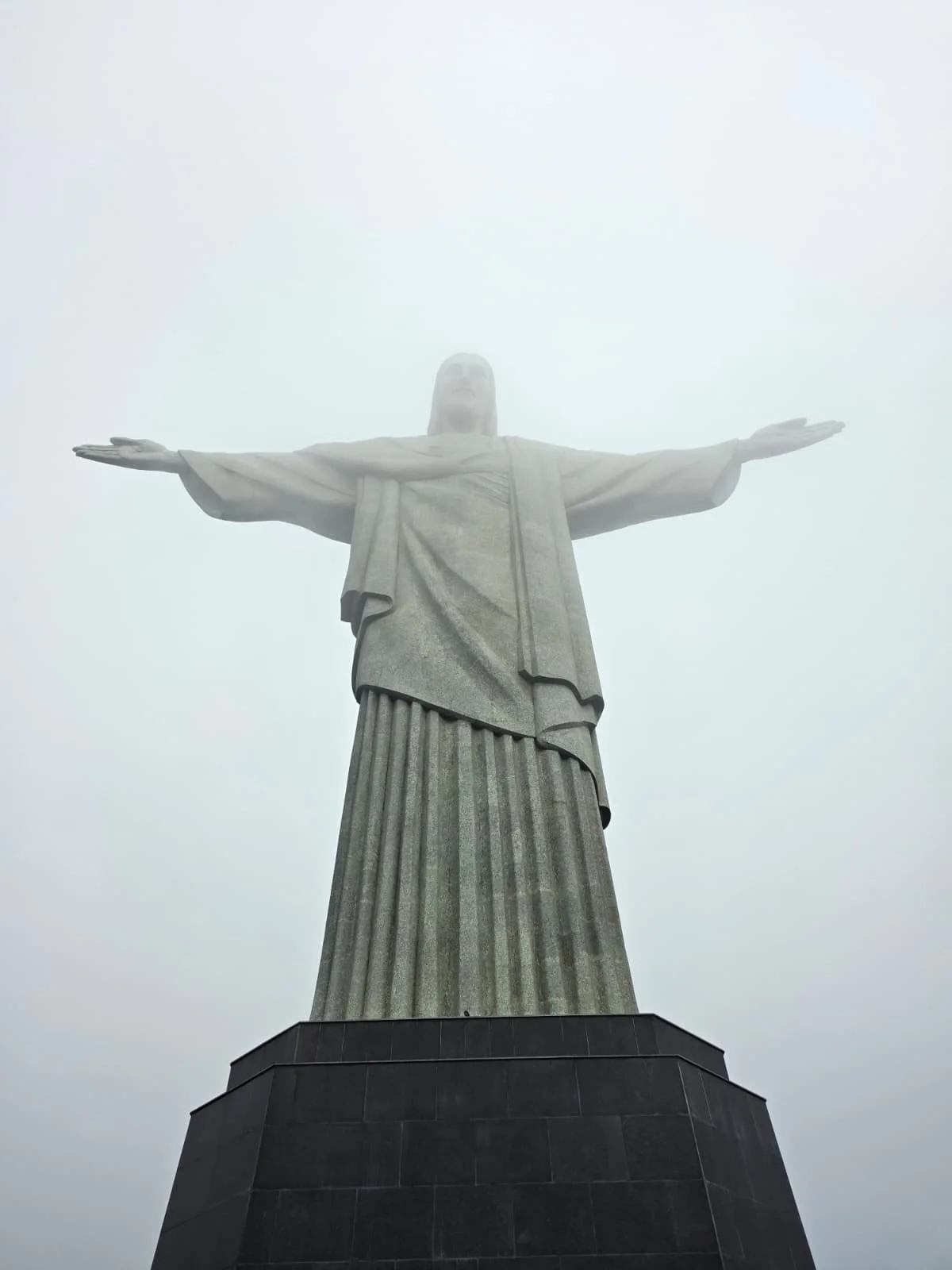
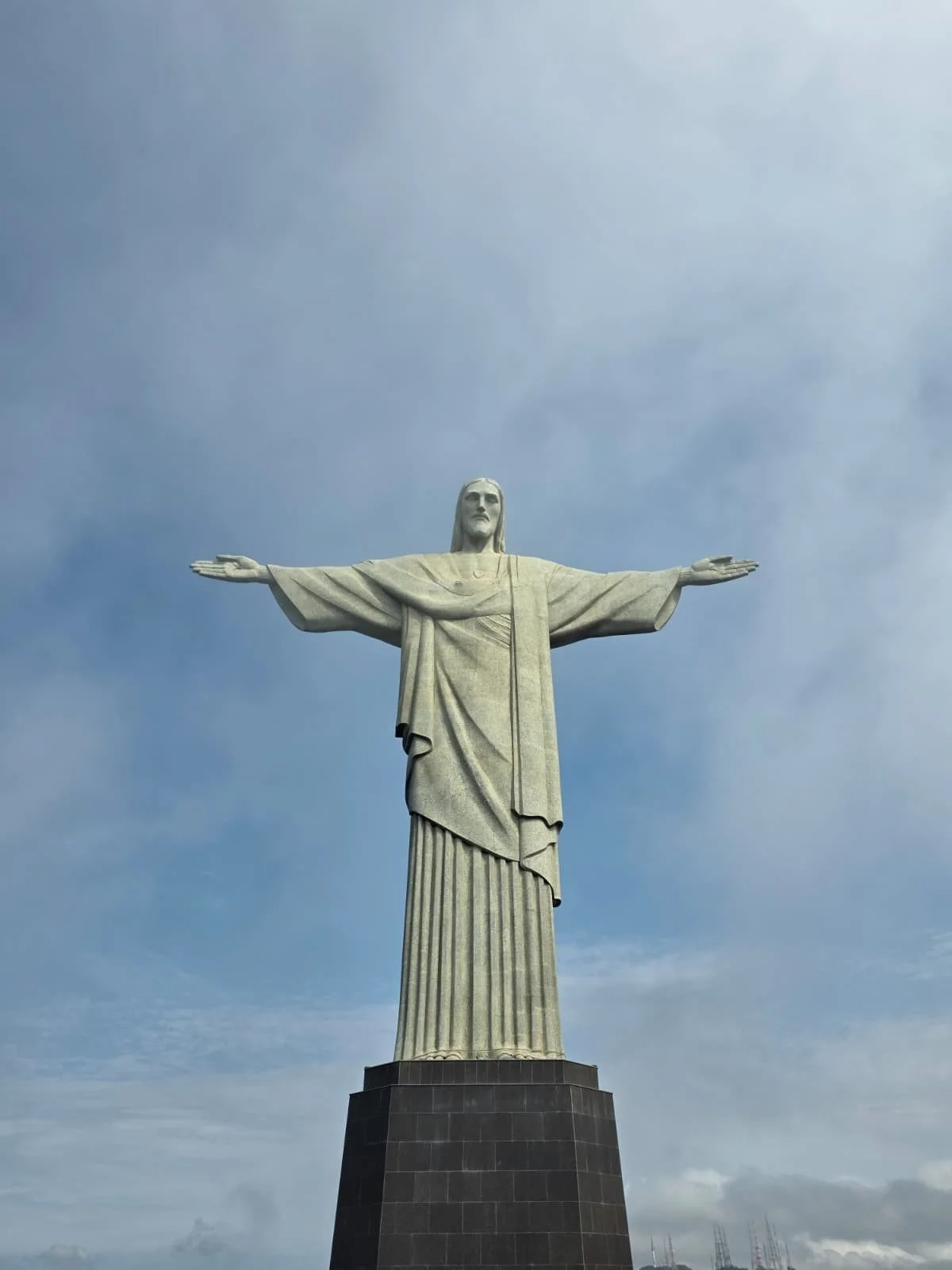
The story is told in Rio like this. In the nineteenth century, a priest wanted a monument on the mountain above the city, and when the princess freed the slaves and the people called her the Redeemer, they wanted the monument to be a statue of her. She said no. She said she was redeemer of nothing, that only Christ redeemed anyone, and that they should put him up there instead. And so there he stands, thirty metres of soapstone with his arms out over the bay, because a princess would not take the honour for herself.
It has all the elements of a great legend. It has a mountain, a humble woman, and a moral you can carry home on the train. Our guide relayed it to us at the summit last week, not as a legend or a local tradition but as fact, in the same voice he used for the height of the statue and the year it was finished, and nobody in the group had any reason to doubt him. I have since heard it from people who have never been to Brazil.
It sounds great, but being a skeptic, when I went to check it, I expected to find that none of it was true. I was wrong about that; most of it is documented, some of it in her own household's letters. What is not documented is the last clause, the "and so." Every piece of it happened. The thread that joins the final two pieces has never been found, and the thread is the part the guide was selling.
2
Here is what the record holds, in date order.
In 1859, a French Lazarist priest named Pierre-Marie Boss arrived in Rio to serve at the church of the Immaculate Conception in Botafogo, at the foot of Corcovado. He began telling people of a dream in which the mountain became an altar, with an image of the Sacred Heart of Jesus on its summit. He left a poem about it. He left no plan, and no record of who heard him.
In February 1872, after her first regency, the city council of Rio proposed a statue in memory of that regency. Her husband, the Count d'Eu, wrote to the head of the government that she refused it vehemently and asked that any money raised be spent on public schools instead.
In May 1888, as regent again, she signed the Lei Áurea, the Golden Law, abolishing slavery in Brazil without compensation to the owners. Freed people and abolitionists called her A Redentora, the Redeemer. The title was the honour of her life. The monument she would not have. Within weeks the Brazilian Historical and Geographical Institute proposed a statue to "the Redeemer," and the Count d'Eu wrote again, this time to a member of the Institute: the princess did not permit a statue to be raised to her as signatory of the Golden Law, for several reasons, chief among them her father's example, Pedro II having refused a monument to himself after the Paraguayan War. The historian Mary Del Priore records that she told friends she was redeemer of nothing and that only the Sacred Heart of Jesus was the redeemer of mankind. The Archdiocese of Rio, which owns the statue, says she rejected the Corcovado honour and ordered a Sacred Heart in its place; it cites no document.
Eighteen months later came the ship. In November 1889 a military coup proclaimed the Republic, the imperial family was put on a vessel for Europe within days, and whatever had been ordered for the mountain died with the monarchy.
In 1908, from exile in Normandy, she received a letter from a committee of Catholic ladies in Rio who had named themselves after her and who proposed a colossal Christ the Redeemer on Corcovado with a statue of Isabel at his feet. She replied by telegram, accepted the honorary presidency, and asked God to bless all who gave themselves to such an act of love. Nothing was built.
She died at the Château d'Eu on 14 November 1921.
In 1921 and 1922, a different body, the Catholic Circle of Rio, took up the idea afresh for the centenary of independence. Brazilians paid for it by subscription. A Brazilian engineer, Heitor da Silva Costa, designed it; the French sculptor Paul Landowski made the model in Paris; the statue was built in reinforced concrete on the mountain, faced in soapstone, and inaugurated on 12 October 1931, ten years after the princess was buried. There is nothing of her at the sanctuary. One of her biographers notes that there is not so much as a small bust.
So the refusals are documented, in two letters from her husband, sixteen years apart. The wish for Christ on the mountain is documented in her telegram of 1908. Every history of the statue attaches her to Boss's dream, sometimes as patron and sometimes as the figure to be honoured, but none can say when she first heard of it. And what is not documented at all is the link the guide sold us: that her refusal is why the statue is called Christ the Redeemer rather than the Sacred Heart, and why it stands there at all. Del Priore calls that inference plausible and without conclusive proof. The 1921 committee was not acting on her behalf, and the men who finished the work did not think to leave her name on it.
3
I want to say plainly that the true sequence is better than the legend.
In the legend, Isabel is the author of the outcome. She refuses the honour, redirects it, and the statue is her humility made visible. The story closes with her getting, by indirection, exactly what she asked for.
In the record, she refuses the honour twice, in writing, and gives her reasons: her father, the schools, the one to whom the name belongs. She asks for Christ on the mountain. Then the monarchy falls, the project dies, and she goes into exile. From there, in 1908, she says yes to something the letters had said no to: a Christ with a statue of herself at his feet. It is not the same act as the refusals, and I will not pretend it is; it makes her a woman and not a saint. Nothing comes of it, and she dies in a foreign country. What goes up on the mountain ten years later is a different statue, raised by different people for their own reasons, under the name she had said was the only one that fit, and with no acknowledgement of her at all. She did not arrange it. She did not live to see it. And the refusal that the legend praises her for went, on the mountain itself, entirely unrecorded.
That is not a story about humility rewarded. It is a story about honour refused in writing, and then assigned anyway, forty years later, by other hands, to the one she had named, with the woman who named him left out of it.
4
The Nobel Peace Prize has an origin story too, and it is told with the same confidence. A French newspaper, the tale goes, mistook Alfred Nobel's brother's death for his own in 1888 and called him the merchant of death, and Nobel, appalled at how he would be remembered, rewrote his will. The clipping has never been found. What is documented is smaller: a French paper did report his death by mistake that year, in a single sour sentence, and corrected it the next day; Nobel never said why he created the prizes - the will came seven years later. Whatever moved him, what he built was a machine he never lived to see run. Five Norwegians in a room, once a year, on nobody's application, decide whose name goes beside his. An arms fortune became a synonym for peace by being given away to strangers.
5
Jesus had a theory of honour, and it is more mechanical than it is usually preached.
In the Sermon on the Mount, he describes men who sound a trumpet before they give alms, so as to be seen, and he says of them that they have their reward. The Greek verb is apechousin, and it is a commercial word. It is what you write on a receipt: paid in full, account closed. He is not saying their reward is smaller or delayed. He is saying the transaction is complete. They wanted to be seen; they were seen; nothing is outstanding. The alternative he offers is a Father who sees in secret and repays. The same idea of payment, a different payer, a different date.
That gives two columns. Honour taken now is a settled account. Honour left with someone else is an open one.
Matthew puts the sharpest version of this in a mother's mouth. She comes to Jesus with her two sons and asks that they sit at his right and left hand in his kingdom. It is the most natural request in the world, made on behalf of people she loves, to the one person who could grant it. His answer is that those seats are not his to give; they belong to those for whom his Father has prepared them. The other ten disciples are furious, which is how everyone else in the room reacts when a seat is petitioned for. And then he turns the whole exchange into the sentence about the greatest being the servant, which is the sentence people remember, though the mechanism was stated first: the seat exists, it will be filled, and it cannot be applied for.
Revelation supplies the last piece. Around the throne sit twenty-four elders wearing crowns, real ones, given to them. Their response to being crowned is to take the crowns off and throw them at the feet of the one who sits on the throne. Honour received is not refused. It is handed straight back to its source.
Three texts, three functions. Honour taken is settled. Honour sought cannot be given. Honour received is for returning.
Isabel, on the evidence of two letters, was doing the third. She was given a name by people who had nothing else to give, and she handed it back, in writing, to the one she said it belonged to. What she was not doing was arranging the mountain. That was taken out of her hands by a coup and then by time, and the people who finally built there did not consult her memory. The triad describes the mechanism. Her part in it ends with the refusal; everything after that is other people, and none of them thanked her.
6
There is a word painted on the front of nearly every apartment block in Rio, and after a day or two, I could not stop seeing it. Edifício. It means building, and it is usually followed by a name: Edifício Copacabana, Edifício Dona Isabel, somebody's surname in bronze letters over the door. I saw it from the taxi, from the beach, from the train up the mountain, and somewhere on the way up, it stopped being a sign and started resonating in me, because I knew what it was carrying. It is the Latin aedificium, a temple or a dwelling that someone has made. English took the root twice. Once as edifice, the thing built. And once as edify, which is the Vulgate's word for what Paul says love does in 1 Corinthians: knowledge puffs up, but love builds up. Same root, two directions. The dictionary gives you that much; Rio supplied the rest of the distinction, one facade at a time. In Rio, the edifice is built to carry a name. To edify is to build someone else.
Every block in that city announces itself as an edifício and then gives a name, mostly somebody's. Above all of them stands a building that gives someone else's.
Some of the names are going. In Copacabana, the bronze letters are being prised off the facades and sold to scrap dealers by the kilo; they are worth more as metal than as a name.

Edifício Centro de Copacabana. Photograph: Diário do Rio, Quintino Gomes Freire, 2021.
The appetite for the edifice is old, and it does not belong to one man. Absalom raised a pillar in the king's valley because he had no son to keep his name in remembrance, and named it after himself. The same receipt is written for a donor's wing, a presidential library, and the bronze letters over an apartment door.
The present supplies one exhibit in daylight, and I will name him, because coyness is its own dishonesty. Donald Trump has campaigned for the Nobel Peace Prize in the open for two years. When the 2025 prize went instead to the Venezuelan opposition leader María Corina Machado, she dedicated it to him; in January, after American forces removed Maduro, she brought her medal to the White House and gave it to him, and he kept it. The committee noted that the prize cannot be transferred. He has, in other words, the medal without the honour, which is a very precise object. The coin that went into circulation this week with his face on it, the first living face on American money in nearly two centuries, is only the same object in smaller change.
He did not invent the trumpet before the alms; presidents have wanted this prize before, and one received it so early in his term that the committee's own secretary later wrote that they had hoped it would strengthen him, and it had not. What he did was sound the trumpet where everyone could hear, and in doing so, he made visible a mechanism the rest of us operate behind a curtain.
The theology does not require me to judge his heart, and I will not. I do not know what he wants in the quiet. What I can see is the receipt, and the receipt is the same one Matthew wrote for everyone. But the mother of Zebedee's sons is worth one more look. The heads of government who nominated him are her. They asked, on behalf of someone they had reason to please, for a seat that is not in the gift of the people they were asking. And the answer they received is the same one she got.
7
Put the accounts side by side.
One man wanted to be remembered well and, by a will nobody has ever fully explained, built a machine that honours strangers once a year. Another man wanted the machine's product and went and got the medal by hand. A woman signed a law and was honoured for it by people who had nothing else to give her, and she wrote back and refused. Eighteen months later, she went into exile with the fallen dynasty and died abroad without a monument. Forty years later, the honour went up on the mountain over the city that exiled her, under the name she had said was the only one that fit. It was built by people who did not think of her. She had nothing to do with that either.
Honour taken now is a closed account. Honour left in other hands stays open, sometimes for decades, and pays out in a currency you did not choose to someone who may not be you; and a name cast in metal can always be taken down again and sold by weight. The elders around the throne understood this better than the mother of the sons did. They were crowned, and they threw the crowns at his feet, and it is the throwing, not the crown, that the text remembers. On the evidence of two letters, so did a princess in Rio, and the mountain does not remember her at all.
8
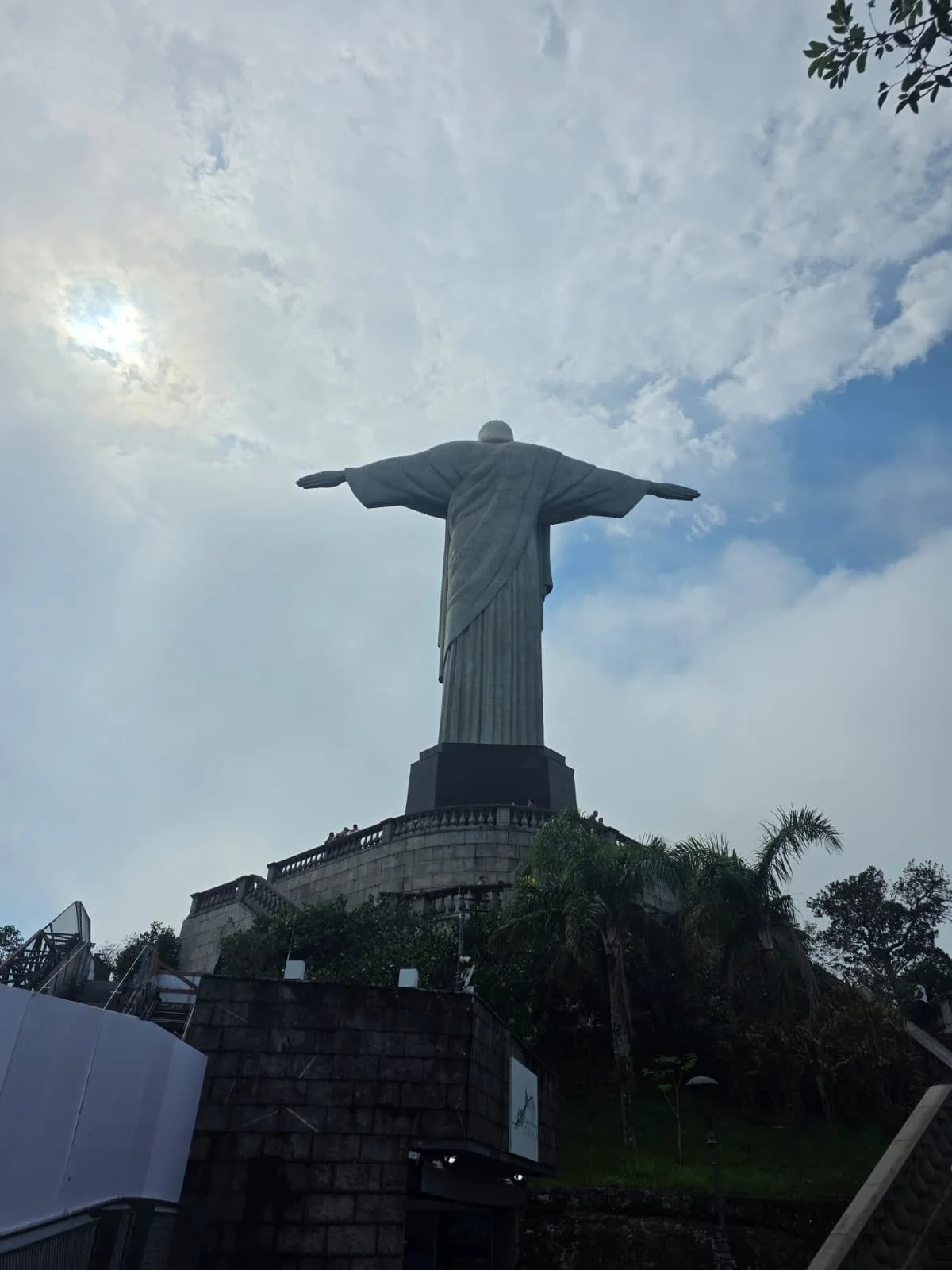
I stood under the statue last week. There had been cloud all morning, and when it lifted the crowd raised its phones, and then something whistled and two monkeys came over the rail, and most of the people who had climbed the mountain to see the Redeemer turned their backs on him and played. He did not move. The arms stayed out over the city. Whoever the name belongs to, he has never once come down to claim it.
Paul Scribner
Photographs by the author, except the Edifício Centro de Copacabana facade, courtesy of Diário do Rio (Quintino Gomes Freire, 2021), diariodorio.com.